Description
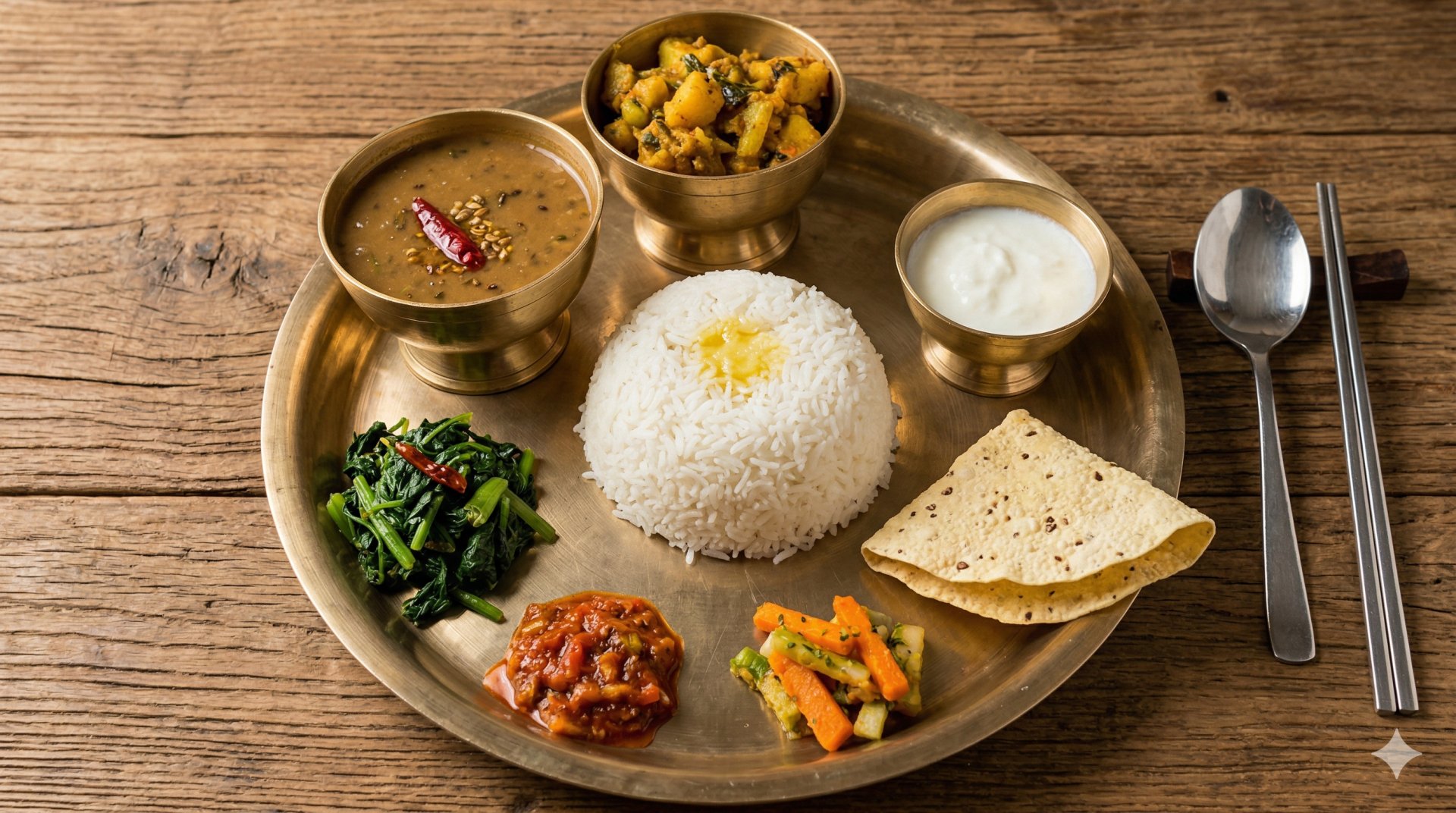
A national set meal eaten twice daily, morning and night, across Nepal. Centered on 'Dal' (lentil soup) and 'Bhat' (rice), served on a round brass platter (Thali) alongside spiced seasonal vegetables (Tarkari), pickles (Achar), and sautéed greens (Saag). An ultimate one-plate dish with perfectly calculated nutritional balance based on Hindu teachings.
Restaurants serving Dal Bhat
Researching
We are researching restaurants that serve this dish.
On this site you can check dictionary details and, later, places to buy or eat related items.
The Recipe section below is a general reference, not a recipe from the listed shops.
Recipe
Ingredients
- Unpeeled Lentils(Masoor Dal etc.)
- Basmati Rice
- Cauliflower/Potato
- Ghee
- Mustard oil
Instructions
- [Authentic Recipe]
- [Dal Prep]: Boil soaked lentils with turmeric and salt until mushy. In a small pan, heat ghee, temper garlic, cumin seeds, and jimbu until just before burning, then pour sizzling into the dal pot.
- [Tarkari]: Stir-fry seasonal veg like cauliflower or green beans in mustard oil with cumin and coriander, evaporating moisture.
- [Plating]: Mound rice high in the center of a Thali and arrange dal and sides around it.
Learn more Spice, substitutes, tips
Key spices
Jimbu(Alpine herb)、Cumin、Turmeric、Coriander
Substitutes at Japanese supermarkets
(Completely different from JP curry or miso soup. Minimum requirement: unpeeled lentils, ghee, and mustard oil.)
Pairing
Lassi / Chiya(Nepali Milk Tea)
Trivia
The source of Nepali energy, leading to the famous saying 'Dal Bhat Power 24 Hour'. Cooked with modest oil and spices so you never tire of it, making it much gentler for daily consumption than Indian curries.
Eating tips & etiquette
The tastiest Nepali style is pouring Dal over rice, mixing in small amounts of sides bit by bit, and eating entirely with the right hand. In restaurants, rice and dal refills are always free.
Allergen
Dairy (if using ghee)