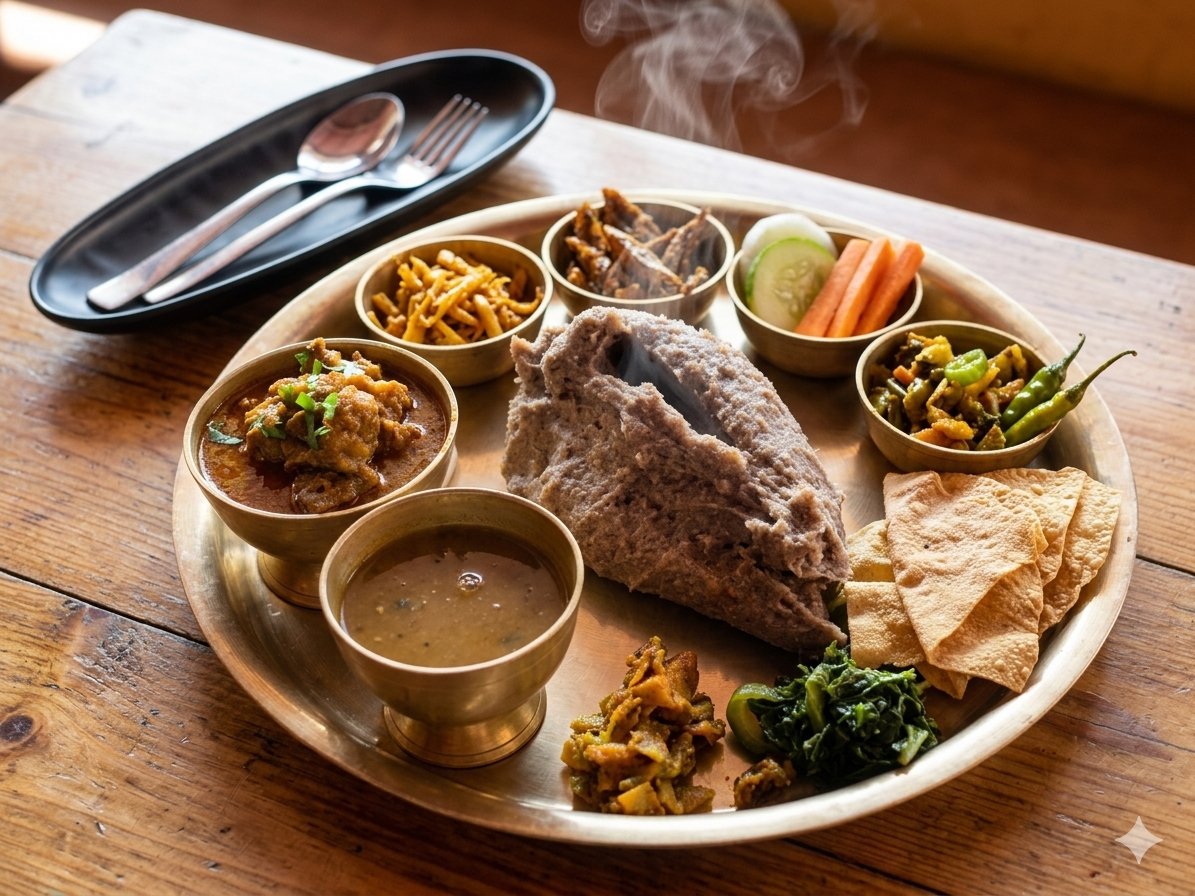
Dhido
A staple food in the mountains where rice does not grow. Powerful kneading of buckwheat flour and millet flour
Description
A traditional staple eaten instead of rice in Nepal's mountainous regions. A 'Sobagaki'-like lump made by continuously and vigorously stirring buckwheat, millet, or corn flour into boiling water with a special long stick. Offers a chewy texture and rustic grain sweetness.
Restaurants serving Dhido
Researching
We are researching restaurants that serve this dish.
On this site you can check dictionary details and, later, places to buy or eat related items.
The Recipe section below is a general reference, not a recipe from the listed shops.
Recipe
Ingredients
- Buckwheat flour(or millet/corn flour)
- Water
- Ghee(Clarified butter)
Instructions
- [Authentic Recipe]
- [Boil Water]: Boil water in a pot, add a drop of ghee (clarified butter).
- [Knead Flour]: Gradually sprinkle buckwheat (or millet/corn) flour into boiling water to avoid lumps, stirring vigorously over heat with a long wooden spatula called 'Madani'.
- Done when it gains enough elasticity to peel smoothly off the pot.
Learn more Spice, substitutes, tips
Key spices
None(Enjoy rustic grain flavor)
Substitutes at Japanese supermarkets
Knead JP 'Sobagaki flour' with hot water
Pairing
Gundruk (Fermented veg soup) / Local Chicken Curry
Trivia
Requires immense stamina to knead, often making it 'men's work'. Highly digestible and incredibly filling, it's the ultimate energy source for mountain workers. Recently re-evaluated as a health food in cities.
Eating tips & etiquette
[Crucial Manner]: Tear a bite-sized piece by hand while hot, dip generously in Gundruk soup or chicken curry, and 'swallow it whole without chewing' to avoid choking—the traditional Dhido way.
Allergen
Buckwheat, Dairy (if using ghee)